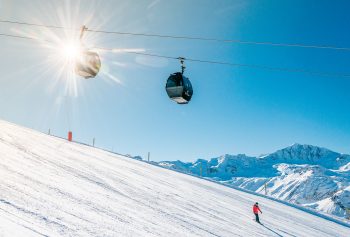
Summer by Lac Leman, winter in Verbier

Lake-side living.

Switzerland today is famous for its banking sector. In recent  years an increasing number of private banks, hedge funds and brokerage firms have established themselves in and around Geneva and Lausanne, in the Lac Leman area. Switzerland’s favourable corporate and personal tax regime, as well as an outstanding quality of life, has encouraged many institutions, and the wealthy private clients they rely upon, to move here.

For these new inhabitants of the lake-side, one of the big lifestyle draws is the proximity to some of the worlds best skiing with a handful of world class ski resorts within a 1- to 2-hour drive. Due to its accessability and the availability of luxury property both for sale and to rent, Verbier has benefitted hugely from this expanding market.

While the lake-side is a huge draw in summer, in winter it is often shrowded in fog or low lying cloud and can be a little dull and depressing. In contrast Verbier is well known as a sun-trap and its solar-drenched winter slopes are a major attraction! It is, however, notoriously difficult to rent properties or a hotel room in Verbier just for the weekend - most hotels and chalet companies only accept week-long bookings. In addition high season holiday weeks can be very expensive. Couple these facts with the hastle of having to pack and unpack ski gear at the start and end of every stay, and the motivation for more and more people from the lake-side renting chalets and apartments for the season, or annually, is no surprise.

It has become quite normal to move the family to Verbier for the entire winter season while the bread-winner either commutes on a daily basis or stays in the lake-side residence and comes to the village at the weekend and during holidays. With the new St Georges private school in Verbier and the continuing trend for home-based work, many families are deciding to make the move entirely and are living here on an annual basis.

The trend of acquiring properties in Verbier for seasonal or annual rent is not restricted just to those based on Lac Leman. Over the past few years we have see an increasing number of families from London, Monte Carlo and other high wealth areas moving their families to Verbier for the season.

At a time when weekly client visits have been in decline due to the strength of the Swiss Franc, this additional market source has hugely benefited Verbier’s economy. As a business we have also benefited through an increased number of seasonal and annual clients.

With this burdgeoning market in mind, we have just taken on a new 3-bedroom property which is available on a seasonal or annual basis. Val Fleuri is centrally located just behind the Fer à Cheval, only three minutes stroll from Médran and the centre of the village. The property was recently converted and has been finished to the highest standards. With one master double en-suite bedroom and two further bunk rooms sharing a shower room this is the perfect family property.

Photographs by Yves Garneau.

Mountain culture in London

While in London last week I got a chance to peek around the annual London Ski and Snowboard show at the Earls Court Exhibition Centre. I got there as the doors opened on Wednesday, the first day of the show, and so missed out on the carnival-like festivities that typically characterise the event, but it did give me a chance to peruse the exhibits without having to elbow my way through the crowds.

As a recent iPhone convert, I was intrigued by the efforts made by a couple of British exhibitors to capitalise on the difficulty of operating touch-screen technology with gloves on. eGlove has a small range of gloves designed with conductive material in the index finger and thumb to facilitate touch-screen use. Without actual reviews supporting the technical capabilities of these gloves in extreme environments, and with the likes of Burton and North Face also producing similar-purpose gloves, leading the market may prove difficult. iPrint has a different, simpler take: their conductive adhesive strips attach to any glove and, at a couple of quid for a pair of stickers, provide a much more affordable solution. The unknown factor here is how long these adhesive strips can be used for before they fall off and need replacing.

But perhaps the best solution to this dilemma would be to leave our touch-screen crutch at home when we head into the mountains?

The highlight of my day was in fact a visit to the Royal Geographic Society in South Kensington. The Rivers of Ice: Vanishing Glaciers of the Himalaya exhibition is a thought-provoking and poignant piece of work produced by photographer and founder of GlacierWorks David Breashears. The exhibit is on until November 11th and is well worth making an effort for.

Since 2007 David Breashsears has made eight photographic expeditions to the Greater Himalaya region. Together with his team at GlacierWorks they have set out to recreate some of the classic photographs of the region taken in the early 1920s by Sir Edward Oliver Wheeler, George Mallory and Vittorio Sella.

The result is astounding, a collection of then and now images that illustrate the vast reduction in the world’s greatest vault of pure untapped water. Breashears attention to detail in retracing the footsteps of these early pioneers in the most inhospitable environment on the planet is captivating and stirring. If you’re in London, don’t miss this.

Early season turns in Verbier …

Below are a couple of shots taken this past Sunday (october 9th) when staff-member Sarah MacPherson skinned up from Verbier to get some early season turns following the storm that blew through from the north … Looks like winter!

Photographs by Sarah MacPherson.

Snow arrived this weekend

New snow Bruson

New snow and soft morning light.

Happy Monday. This weekend a low pressure system from the north hit the Alps of Switzerland and brought with it low temperatures and precipitation. Unconfirmed reports claim up to 40cm of snow fell in some places in the alpine. On Saturday it snowed quite consistently in Verbier and we woke up on Sunday to a clearing weather pattern that left us with a beautiful blue-bird day.

Always eager, a couple of Bramble Ski’s staff headed into the mountains to enjoy the bounty of snowfall. Check out our Facebook page for images of Sarah’s first day skiing of the season and Phil’s snowshoe hike.

The temperatures in the sun were actually very warm yesterday and the snowline quickly receded. Sunny conditions and marginally warmer temperatures are forecast for the rest of the week so I don’t expect the snow will last, however, it was great to get a taste of winter and to see the Bramble Ski crew taking early advantage.

Photographs by Barry Cox.

New properties and improved communications

The leaves are starting to fall here in the Swiss Alps as the countdown to winter begins. The first lifts are due to open in 6 weeks and the locals are all predicting a bumper snow season.

We have added three new properties for the coming season. Chalet Montana and the Penthouse Le Daray will be rented on a weekly basis and Chesa Luna on a seasonal rental basis.

Barry Cox has joined our central team as our Group Marketing and Communications Director. With 10 years of experience in photojournalism in Europe and Africa and 4 years of experience heading up our Canadian operation he will focus on electronic and traditional communications to the market.

In St. Anton our 5 luxury properties are selling fast while in Switzerlnd sales have hugely picked up over the past few weeks as the Swiss Franc has lost some
strength against the Euro, Pound and other key currencies.

Three New Properties Added in Verbier

Chalet Montana, Alpine Luxe – sleeps 11 (additional beds available), stunning 7 bedroom, 750m2 free standing chalet, ski-in, perfectly located close to Medran and the centre of the village, available for all weeks of the season. Prices between CHF48,000 and CHF75,000 a week on a catered basis.

Penthouse Le Daray, Alpine Classic – sleeps 9, beautiful 4 bedroom, 2,25m2 penthouse apartment, great location at the bottom of the Le Rouge piste with great access to all areas of the village. Priced between CHF13,500 and CHF25,000 a week on a catered basis.

Chesa Luna, Alpine Luxe – Sleeps 10, beautiful 5 bedroom, 2,75m2 chalet, located in the heights of Verbier, priced at CHF230,000 on a seasonal basis.

Seasonal / annual rentals

We have Chesa Luna available on a seasonal basis for CHF 230,000 and a new 3 bedroom property located 200m from Medran also available on a seasonal or annual basis (please enquire for details).

Please see our Seasonal Rentals page for further details.

Property finder service / Properties for sale

We have a great selection of luxury properties in Verbier for sale. For further details see our Real Estate page.

Preparing for winter in Verbier and St Anton …

A change in season initiates a change in gear … autumn signifies the end of summer (though current sunshine and warm temperatures hardly reflect this) and for us at Bramble Ski the focus shifts to operational planning, ensuring that we’re best prepared to provide the most exceptional holidays possible to our clients visiting Verbier and St Anton in the winter ahead.

Detailed organisational charts illustrating the key roles of the central team have been drawn up and circulated; pro-active and re-active roles have been analysed, dissected and transcribed onto numerous pages of a flipchart; we’ve even cleaned up and re-decorated our Verbier office space! We are now within 12 weeks of our first guests’ arrival – time to collect balances and organise the specifics of individual holiday requirements. The countdown has begun and our focus is most certainly on another memorable winter ahead.

With this in mind, the news of potential snow in the Alps this weekend has got some of us thinking about when we’ll get a chance to earn our first turns of the season. But until that time we’ll continue enjoying the fine weather. Yesterday, Duncan and I biked up to the top of the Bruson lift (a vertical ascent of about 1,400m from Le Châble) descended into the valley behind Bruson, following our noses to the small town of Orsières at the foot of the Mont Blanc Massif and returned to Le Châble by way of road. It was a fantastic ride through a landscape of fiery autumn colours in the high tree-line and alpine. Meanwhile Phil, our web designer, cycled up the Val de Bagnes to Lac de Mouvoisin, the 13th highest dam in the world, a round-trip of 50km involving just over 1,800m of vertical ascent.

If you’re coming on a ski holiday this winter, road cycing and cross-country biking are great training! They build strong quadriceps and are excellent cardio-vascular pursuits. Get out there, enjoy autumn and get psyched for the winter ahead.

Executive chef, Gerwin Brand, on using local ingredients

In the first of a series of regular autumn recipe postings, our executive chef Gerwin Brand draws inspiration from the season for an earthy dish of wild mushroom gnocchi. Look out for Gerwin’s recipes every two weeks as he, and the team here at Bramble Ski, gear up to provide another season of the finest ski holidays in the Alps …

Potato Gnocchi with Sautéed Wild Mushrooms, Viande Séchée and Roquette

Potato gnocchi with sauteed wild mushrooms

Gerwin's hand-picked wild mushroom creation. More images follow the recipe below.

This is a simple dish made entirely from local ingredients. We are entering the autumn slowly but surely here in the Valais and mushrooms are shooting up from the soil left, right and centre. I decided to go foraging in the mountains last Saturday to see what I could find to make a meal with. With a picnic in my back-pack and a beautiful soft autumn sun in the sky, I headed up the hill. Six hours later I returned home with about a kilo-and-a-half of mushrooms consisting mainly of Slippery Jack (the yellow version) and a selection Cêpes, Saffron milk cap and Cantharelles to top the hunt off.
When I started thinking about what I wanted to cook with these beautiful mushrooms I knew one thing for sure: It had to be a dish made up of ingredients that were all available in the region of the Valais.
Potatoes are grown abundantly here and the earthy flavour of the mushrooms combines well with them. Viande séchée is a local cured beef speciality and I had some roquette growing in my little plant pot on my balcony. From these simple ingredients a new dish is born.
I am giving the recipe for the dish below to inspire you to get cooking with autumn flavours. Even though the cured beef is a local speciality that might be hard to get where you are based, the meal can easily be replaced with, for example Parma ham or even a local cured meat from your area, either beef or pork. In case you are not a meat eater you could just as easily leave it off altogether.
So here goes, potato gnocchi tossed in a wild mushroom sauce, served on wilted garlic spinach, topped with a few slices of Viande séchée, roquette leaves and a crouton.
Ingredients (for 4 people):
  • 600g potato gnocchi (see directions below)
  • 250g mushroom sauce (see directions below)
  • 250g fresh spinach
  • 5g garlic
  • 150g Viande séchée or another cured ham, sliced very thinly.
  • 100g roquette
  • 4 croutons (see directions below)
  • 300g wild mushrooms
Start by making the mushroom sauce (Ingredients for 4 people):

Slippery Jack.

  • 25g shallots, finely chopped
  • 5g garlic, finely chopped
  • 150g mixed wild mushrooms like Cêpes, Slippery Jack or Chanterelles. You can buy Cêpes and Chatarelles from most good suppliers at this time of year.
  • 20g dried mushrooms (Cêpes or Winter Chanterelles)
  • 200ml water
  • 25ml dry sherry (preferably Amontillado)
  • Pinch of salt
  • Pinch of cayenne pepper
  • 100g cream
  • 30g butter
Method:
  1. Soak the dried mushrooms in the 200ml of water for an hour.
  2. In the meantime clean the wild mushrooms. Remove any dirt with a small pastry brush and if they are very dirty maybe even give them a quick gentle wash.
    Larger mushrooms like Cêpes and Slippery Jack can be washed under a running tap to avoid too much contact with water.
  3. Then pick the best specimens and set them apart for the garnish. For 4 people you will need about 300g.
  4. Chop the 150g mushrooms for the sauce in small pieces, about 1 square inch.
  5. Sweat the shallots in some butter in a small frying pan, ensure they stay transluscent and do not colour.
  6. Sauté the chopped mushrooms in a separate frying pan in some butter over a medium to high heat. You want to get some colour on the mushrooms but do not burn them.
  7. Once the mushrooms have some colour, add the chopped garlic and a pinch of salt and the sweated shallot from the other pan.
  8. Deglaze the pan with the sherry and leave this to evaporate.
  9. Add the cream and then the dried mushrooms to the liquid. Bring the contents of the pan to the boil and simmer for a few minutes.
  10. Pour contents in to a blender and purée. Pass the sauce through a fine sieve into a clean pan. It should have the consistency to coat the back of a spoon. Check the seasoning of the sauce and add more salt and a pinch of cayenne if needed, along with a few drops of lemon juice. Now set the sauce to the side.
Onto the potato gnocchi (Ingredients for 4 people):
  • 1kg starchy potatoes like Bintje, King Edwards or Maris Piper
  • 1 egg
  • 200g plain white flour
Method:
  1. Peel the potatoes and if they are large cut them in half. Put them in a large pan and cover them with water. Add some salt and bring the potatoes to the boil.
  2. Cook the potatoes until they are done, then drain the water off and steam them dry.
  3. Now pass the potatoes through a passe-vite (a blender will do if you don’t have) into a clean bowl.
  4. Weigh the amount of puréed potatoes. Now you can work out the amount of flour needed. Per 500g of puréed potatoes you need to incorporate 100g of flour. And per 1kg of puréed potatoes you need to add 1 whole egg. If you do not have a rounded amount of 1kg puree then just simply crack the egg in a bowl, whisk it to break it up and pour roughly the amount of egg needed into the purée.
  5. Bring the purée with the egg and flour together into a dough. Be careful not to overwork it as it will go elastic. You need to get a nice fluffy dough.
  6. Take a small part of the dough and roll it into a small log of about 1.5cm thick on a floured work surface. Cut this into 1 inch lengths and roll the pieces of
    dough between your floured hands to coat them completely with flour on all sides.
  7. Store the gnocchi on a piece of greaseproof paper on a tray.
  8. Now test a few of the gnocchi before finishing the entire batch. Bring a small pan of water to the boil, drop a few of the gnocchi in and wait until they come
    floating to the surface. Once the gnocchi are at the surface they are done. Take them out of the water with a slotted spoon. Sprinkle with a pinch of salt
    and taste them and check for firmness. If the gnocchi are not firm enough, simply add a little more flour.
  9. Continue to finish all the gnocchi as in step 6. Lay them out on greaseproof paper on trays and store them in the fridge staright away. Do not make the gnocchi more than 2-3 hours in advance. Over time they will go soft and they will start sticking to the paper, making it difficult to get them off without damaging them. Alternatively you can freeze them straight away. Frozen gnocchi however will need to be used from frozen and they need to be cooked in a large pan of boiling salted water in small quantities over high heat. Only drop a few gnocchi at a time so as to not lose the boil too much otherwise the gnocchi will go soft and disintegrate.
In the meantime make some persilade. You will need:

Persillade is commonly used in French and Greek cuisines.

  • 10g shallot, finely chopped 
  • 5g garlic, finely chopped
  • 20g flat leaf parsley, finely chopped
  • 2g chervil, finely chopped
  • 1g tarragon, finely chopped
Method:
  1. Peel and chop the shallot and garlic very finely and mix them together.
  2. Pick the leaves of the herbs, then chop all finely and mix with the shallot and garlic.
  3. Store in the fridge until needed.
For the croutons slice a small baguette diagonally across to get an angle to it. Continue to thinly slice the baguette in this way. Lay the slices flat on a baking tray and sprinkle with a little bit of olive oil, some crushed garlic and a small pinch of salt. Bake the croutons until golden brown in a medium hot oven at 170°C for about 12-15 minutes. Take the tray with croutons from the oven when they are ready and leave them to cool.
Ensure the roquette is washed and spun dry.
Wash and spin the spinach as well and set aside. Chop 5g of garlic and set aside.
Finishing the dish:
  1. Bring a large pan of salted water to the boil.
  2. Cut the mushrooms you set aside in half or quarters and sauté them in some butter in the frying pan until golden brown all over. Add a spoonful of the persilade towards the end along with a pinch of salt and pepper and toss the mushrooms around in it. Finish with a drop of lemon juice and leave the mushrooms in the pan.
  3. In the meantime gently heat the mushroom sauce.
  4. Now drop the gnocchi in the boiling salted water. Give the pan a few taps with a heavy spoon and wait until all the gnocchi are floating at the top of the water.
  5. In the meantime put a few ladles of the sauce in a shallow frying pan and add the gnocchi  to it with a slotted spoon when they are done. Toss the gnocchi in the sauce and set aside for a minute.
  6. Now quickly wilt the spinach in a hot pan with a bit of butter and the finely chopped garlic. Season with salt and pepper. Then drain the water off that came from the spinach and divide it over 4 large pasta bowls.
  7. Spoon the gnocchi over it, reheat the mushrooms very briefly on a high heat and spoon them over the gnocchi.
  8. Now spoon a few more ladles of sauce over each plate.
  9. Finally, put a few slices of Viande séchée on top of the mushrooms and finish the dish with a small handful of roquette leaves and a crouton.
  10. Serve immediately accompanied with crispy bread and butter.
This dish is perfect for an autumn lunch or, when made in a smaller portion size, it serves well as a starter in a dinner menu.
Bon appétit.
Photographs by Barry Cox.

If you’re after raclette in Verbier, then get to Le Châble in September!

This past weekend Le Chable hosted its annual Raclette Festival, a celebration timed to co-incide with the descent of the local cows from their summer-time pastures up in the alpine, to settle, for the oncoming winter, in the lower meadows of the valley. For a small town, Le Chable sure knows how to throw a party!

Raclette, derived from the French word racler meaning “to scrape”, is both a type of cow’s milk cheese and a dish, indigenous to Valais. It’s a deliciously simple concept: a wheel of raclette is cut in half and the open cheese held over a wood fire or grill for a few minutes allowing it to begin melting. This delectable layer of raclette is then scraped off on to a plate and served alongside baby potatoes, pickled onions and gherkins, and is best accompanied by a glass of locally produced fendant.

Le Chable was bursting at the seams for the weekend and it seems that no one was prepared to miss out on this eating and drinking fiesta. With rivalling dairies set up for raclette production in numerous stalls around the town square, benches and tables lining the road, and an enormous marquee erected for live entertainment and further seating, the town was ready for the onslaught. Old and young, local and foreigner, immersed themselves in the merry-making that continued well in to Saturday and Sunday evenings.

A variety of Swiss musicians kept the atmosphere charged, in particular a talented yodeller from Bern whose tiny frame defied the odds as she belted out songs that won the affection of the crowd. For the children, a display of farm animals, a bouncy castle and a trampoline were on hand. But for most, it was clearly the mouth-watering raclette and local wines that were the reason for staying… and staying some more.

Photographs by Barry Cox.

Trout fishing in Lac de Louvie

Verbier is well known for its winter offering of world-class skiing, fantastic resort atmosphere and availability of luxury mountain chalets but over the course of the off-season months we will be revealing in regular blog postings why this is such fantastic place to live, and visit, regardless of the season.

Cabane de Louvie is one of hundreds of Swiss alpine cabanes built to provide sanctuary for mountain travellers. It sits perched on a ledge above Lac de Louvie at 2,213 meters and is accessed from Fionnay in the Val de Bagnes. Yesterday we hiked up to the lake for a spot of trout fishing. What a fantastic day!

Departing Le Châble just after 4am we parked and started our hike up to the lake at about 4.30am, head torches guiding the way. Though the temperature was fresh (I’d guess close to zero) it wasn’t long before the work of the climb had warmed our bodies. The hike gets straight to business and, once we had found the trail, wastes no time gaining altitude, switching back and forth underneath the imposing presence of some large cliff bands.

Hiking in the mountains by torchlight is invigorating. Above our heads a cornucopia of stars and a sliver of a crescent moon lit the sky and, while you can’t see into the darkness below, you constantly sense the steep pitch of land falling away from you. The hike is strenuous but at no point technical and, after an hour-and-a-half of keeping to a steady pace, we had reached the cabane. From here we could see the glaciers of Grand and Petit Combin, glowing in the pre-dawn light, across the valley.

We were rigged up just after first light. After a couple of attempts we found a spot with some action, which conveniently provided the most astounding fishing backdrop I have ever been privy to, looking across the glacial water at the cabane and the Combin glaciers beyond that.

Lac de Louvie is stocked for fishing purposes, by helicopter! Despite catching and releasing significantly more nippers than those we kept, the fishing was still successful, with a final catch of mostly rainbow trout, but also two namaycush. Namaycush are indigenous to North America and, even in their local habitat, are rare. They are commonly known as lake trout, or in French as cristovomer.

By 2pm we had dabbled at various points around the lake and were back at the cabane for a cold beer before descending to the car, drinking in the stunning vistas that weren’t possible in the darkness of the ascent. Thanks to Pit and Duncan for a fantastic day.

We get to live the day over this evening when we get together with our families to feast on the catch. Overnight Pit has soaked half of the trout in his secret brine recipe and will be finishing it off by smoking it. The other half we’re going to barbeque. I’m salivating already…

Bramble Ski operates a selection of the finest luxury mountain chalets in Verbier and St Anton and offers catered and self-catered ski holidays. Contact us to arrange your bespoke spring, summer or autumn holiday to the mountains through Bramble Été, a subsidiary of Bramble Ski.

Photographs by Barry Cox.

Snowpulse purchased by Herculean Swiss company Mammut

An interesting Swiss business acquisition that took place earlier this summer might not be hot-off-the-press news, but it’s worthy of a mention. Snowpulse, located in Martigny close to the freeriding mecca of Verbier, was purchased by mountaineering product giant Mammut Sports Group for an undisclosed amount on July 1st.

Snowpulse’s avalanche airbag system is already popular around the world. Its cannisters are filled with compressed dry air and can be refilled. The ABS technology (and in fact Mammut’s own Removable Airbag System packs) utilise nitrogen filled cannisters and cannot be refilled, and therefore need to be replaced once deployed. From what I gather the benefits are debatable: considering that most skiiers must board planes in order to get their back-country fixes and airlines have varying policies on carrying nitrogen-filled cannisters, it is certainly less expensive to fill a Snowpulse cannister once landed than to purchase a new ABS nitrogen cannister, but is it any more convenient having to source a location that will do the job at your destination?

Either way, air bag technology offers what’s widely regarded as the safest solutions to avalanche survival and that pro cannot be under-valued. Now that Snowpulse is 100% owned by the long-established Mammut, this Swiss product has the capacity to fully reach its potential. Exciting.